

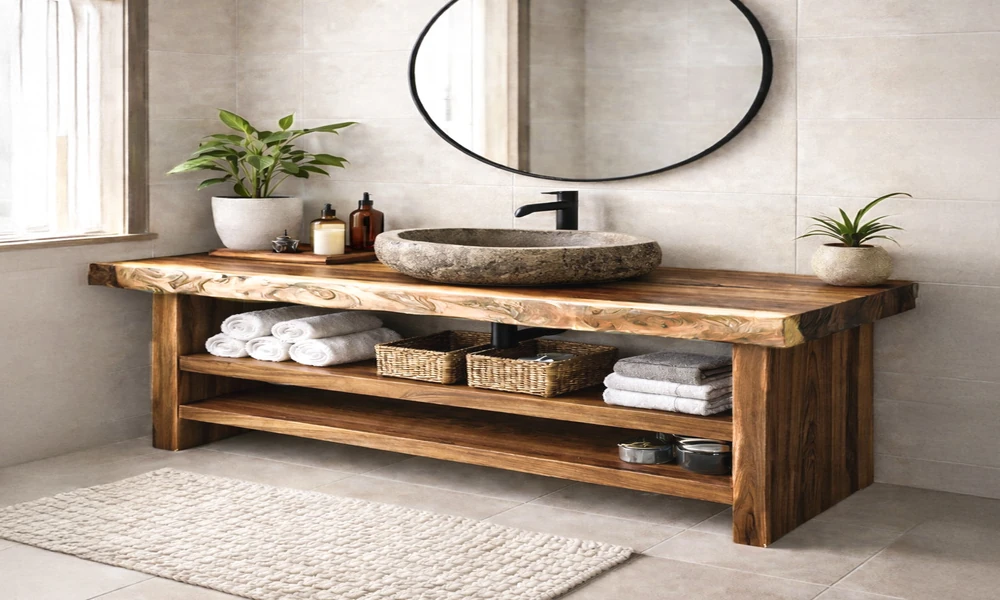
Most bathroom clutter comes from missing surfaces, not missing space. Wall cabinets fill fast, and window ledges become bottle graveyards. A freestanding unit solves this without drilling or plumbing work. A wooden bathroom vanity unit brings drawers and shelving together. Timber also adds warmth to tiled, hard-edged rooms. Placement, materials, moisture care and sizing all shape the result.
Freestanding Pieces Work Where Fitted Cabinets Cannot
Built-in cabinetry needs walls, fixings and often a plumber. A freestanding piece needs only a level floor. Renters benefit most, since nothing gets screwed into tiles. Moving house becomes simpler, because the unit travels along. Even awkward corners near radiators can host a slim tower. Fitted options, by contrast, demand exact measurements and permanent commitment.
Which Storage Styles Suit Small Bathrooms Best?
Footprint matters more than capacity in compact rooms.
- Ladder shelves lean on walls, freeing floor space.
- Narrow towers stack towels high without crowding doors.
- Over-toilet frames use height nobody else claims.
- Rolling carts tuck away when the floor needs mopping.
- Corner units turn dead angles into working storage.
Solid Timber Handles Steam Better Than Expected
Hardwoods such as teak and oak shrug off humidity. Their dense grain and natural oils slow water absorption. A sealed wooden bathroom vanity unit holds its shape for years. MDF, on the other hand, swells once edges get wet. Every surface, underside included, should carry lacquer or oil.
What Belongs Behind Doors Versus Open Shelves?
Visibility decides how tidy a room feels.
- Medicines stay hidden from children.
- Rolled towels look good displayed.
- Spare toilet rolls hide below.
- Daily skincare sits at eye level.
- Cleaning sprays need closed doors.
Open shelves only work when contents look deliberate.
Where Should a Freestanding Unit Sit?
Door swing comes first. Measure that arc before buying, not after. Leave about 60 centimeters clear in front of basin and toilet. Shower screens deserve distance too, as splashes land hardest there. Airflow behind the back panel stops hidden mould growth.
Drawers Change Habits, Not Just Countertops
Clutter returns when items lack a fixed address. Give spare rolls a shelf, and the cistern stays bare. That small rule outweighs the unit’s overall size. A freestanding piece wins by assigning homes, not adding volume. Each bottle then has somewhere obvious to return.
FAQs
Can a wooden unit cope with a windowless bathroom?
Yes, if an extractor fan runs during and after showers. Sealed hardwood handles humidity better than painted chipboard.
How often should the finish be refreshed?
Oiled timber wants fresh oil twice yearly. Lacquered surfaces need only a damp cloth.
Do freestanding units need anchoring to the wall?
Tall, narrow towers should be fixed with anti-tip straps. Low, wide cabinets stay stable on their own.
Will a freestanding unit work on heated floors?
Yes, though raised feet let air circulate beneath. Direct contact with warm tiles can dry and crack timber.
