

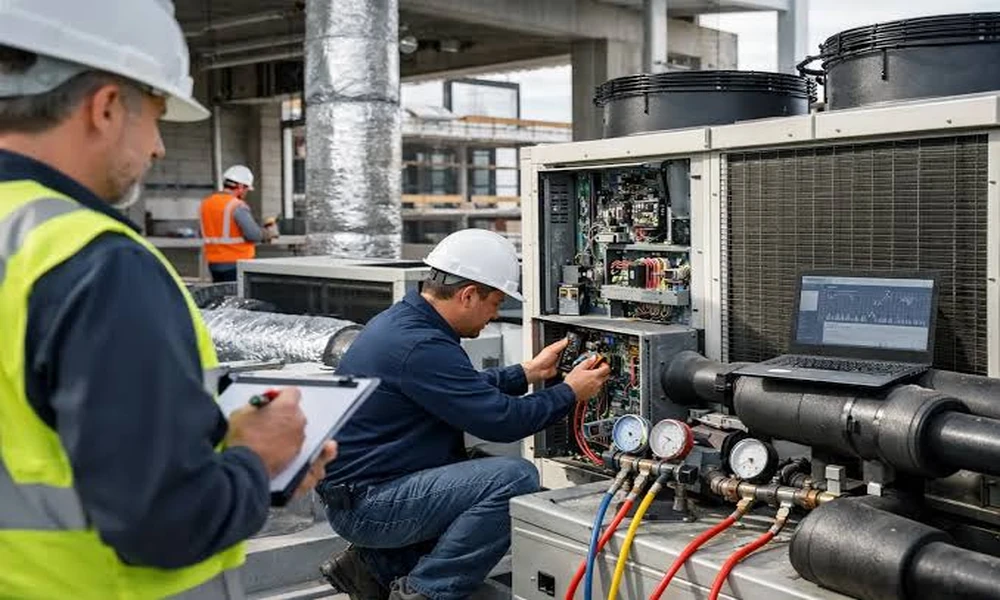
Most performance problems in a new facility are installed, not designed. A reversed damper can waste energy for years. One mislabeled sensor can confuse an entire control sequence. With new building commissioning, owners verify equipment before move-in. Each device gets tested alone, then alongside connected components. The work starts at design, continues through construction, and ends with trained operators. Faults that drawings never reveal surface along the way.
Installation Errors Hide Until Testing Begins
Construction drawings describe intent, but crews interpret them under pressure. Valves end up swapped on site. Control points get misnamed in the automation software. During pre-functional checks, an agent verifies every device independently. Wiring continuity, voltage, and point-to-point mapping all get confirmed. Only after this foundation holds does integrated testing make sense.
Why Does Functional Testing Catch More Faults?
Equipment passing solo checks can still fail alongside other components. Functional tests run integrated scenarios to expose those gaps:
- Chillers stage up correctly as cooling loads climb.
- Generators start and carry load during blackouts.
- Fire alarms trigger smoke dampers and fan shutdown.
- Economizers open when outdoor air turns cool.
Owner Requirements Set the Pass Standard
A design can meet code and still disappoint its owner. Code acceptance sets a minimum floor. Its benchmarks, by contrast, come from the owner’s project requirements document. Effective new building commissioning measures equipment against those stricter goals. A research lab needing tight humidity gets matching tests.
When Should the Commissioning Agent Join?
Earlier involvement produces bigger returns. An agent present at predesign shapes decisions before ductwork is ordered. Late arrival limits the role to finding defects. Design-phase involvement pays off in tangible ways:
- Reviewers flag inaccessible valve locations.
- Specs gain clear test criteria.
- Contractors budget time for verification.
- Sequences get checked before programming.
What Do Operators Gain at Handover?
A building’s staff inherits whatever the contractors leave behind. Closeout delivers tested sequences, balancing reports, and system manuals. Trained operators then understand why a pump cycles at night. Without that knowledge, technicians override controls and erase savings. Second-season testing confirms heating matches summer cooling results.
Test Conditions the Building Never Repeats
Functional testing runs in an empty building. No occupants, no laptops, no afternoon meeting crowds. Those conditions never return once tenants move in. So the recorded results serve a second purpose. Trend logs from that generator blackout test become a fingerprint. Years later, operators compare live data against that record. Drift then shows up early. Pre-occupancy verification becomes the yardstick for every later repair.
FAQs
What separates commissioning from acceptance testing?
Acceptance testing checks installed equipment against code and manufacturer minimums. Commissioning measures performance against the owner’s own documented goals.
Which systems get verified during the process?
HVAC, lighting, emergency power, and fire-safety interfaces form the core. Labs and data centers often add exhaust or cooling checks.
Does commissioning delay project completion?
Planned properly, testing fits the schedule without pushing opening day. Late-found defects cause most delays, and early involvement prevents them.
Is commissioning required by building codes?
Rules differ by jurisdiction; tighter energy codes now mandate it. LEED certification also treats fundamental commissioning as a prerequisite.
